In this article
No. Replacing a consumer unit, often called a fuse box, does not automatically mean replacing the wiring throughout your home. Whether existing circuits can stay depends on their condition and suitability, which an electrician must assess. A new box cannot make damaged wiring safe by itself.
If you have been quoted for a fuse box upgrade and are worried about floors coming up or walls being opened, start by asking exactly which work has been recommended and why. A consumer-unit replacement, repairs to particular circuits and a full rewire are different scopes of work.
What changes with a consumer-unit replacement?
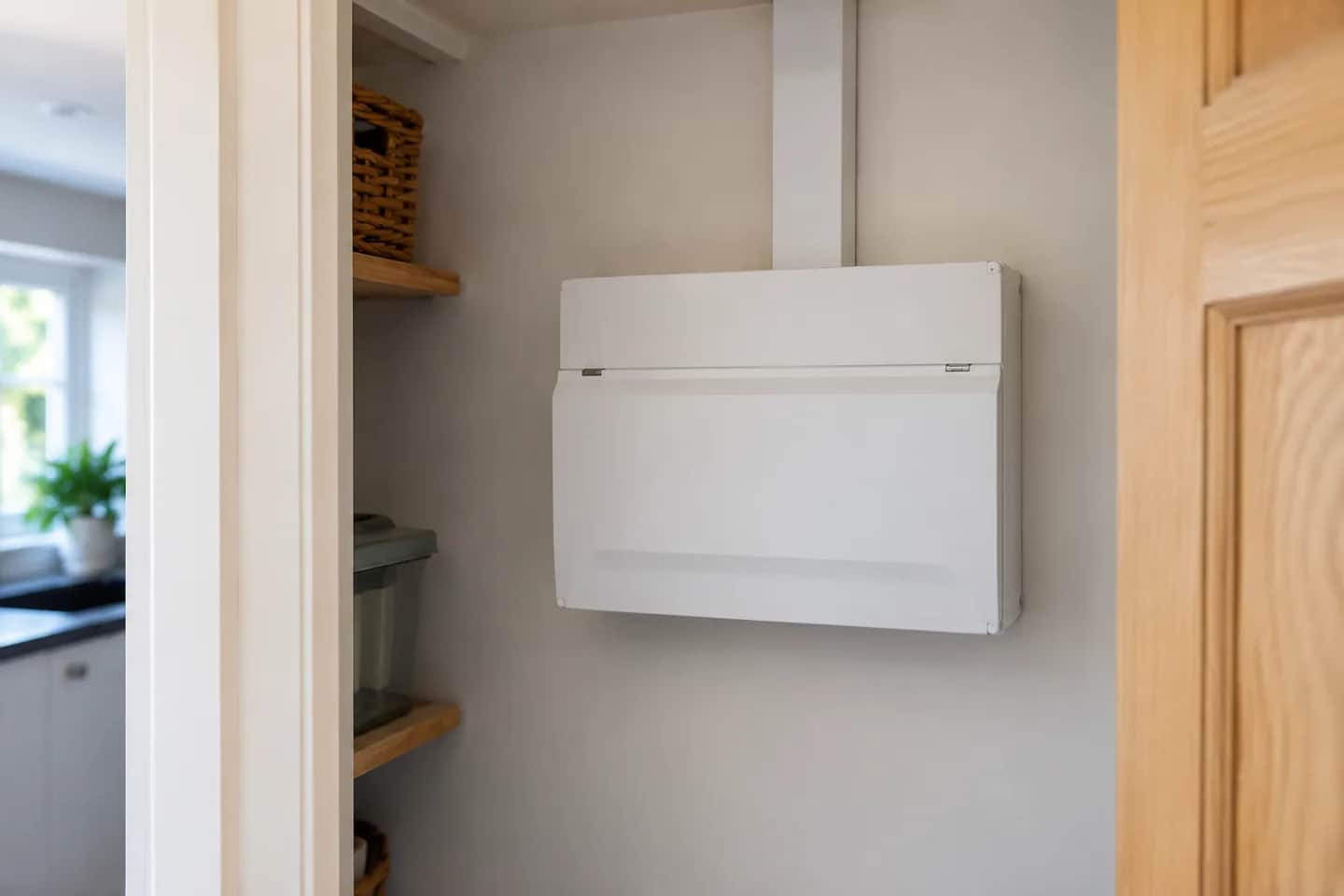
The consumer unit distributes electricity to circuits and contains protective devices. Replacing it changes that equipment and its connections. A rewire replaces circuit wiring around the property; it may also involve new socket and lighting positions. Neither description tells you every detail included in a quotation.
Electrical Safety First’s replacement guide recognises that existing circuits may remain. It also says that an older enclosure or fuse type alone is not a sufficient reason to insist on replacement. Ask for a recommendation based on your installation rather than its appearance.
Why should the wiring be checked first?
Inspection and testing can reveal deterioration, defects and problems with earthing or bonding that a photograph cannot establish. Electrical Safety First recommends an EICR before a planned consumer-unit replacement; its guide requires a pre-work survey if the customer declines that report.
This is useful for your budget as well as safety. Ask whether the assessment is included in the quoted price, what document you will receive and how any additional work will be agreed. Our EICR guide explains the difference between a condition report and certification for new work.
An electrician must not reconnect circuits that present immediate or potential danger as though the new consumer unit has resolved the problem. Clarify how any affected circuits will be dealt with and whether the original programme needs to change.
When might repairs or rewiring be needed?
A problem confined to one part of the installation may call for a different solution from widespread deterioration. The extent of damage, test results, previous alterations and what you need the installation to do all matter. The age of the house alone does not establish the scope.
Ask the electrician to distinguish work needed to address the findings from improvements you are choosing, such as extra sockets or a new kitchen layout. If wider house rewiring is recommended, request an explanation of the affected areas and the reason a smaller repair would not be suitable.
If renovation is already planned, discuss it before agreeing the electrical work. Replacing a consumer unit now and changing the whole kitchen shortly afterwards may require coordination. Share actual appliance plans and intended room use rather than asking for an unspecified “future-proof” installation.
What should a replacement quotation explain?
- The assessment of existing circuits and any separate charge for a condition report.
- The proposed consumer unit and protection, with an explanation of why they suit the installation.
- Any repairs included, exclusions and how newly discovered work will be priced and authorised.
- Access arrangements, expected power interruptions and any supply-side work needing another organisation.
- Responsibility for making good around the equipment and for any changes elsewhere in the home.
- Testing, electrical certification and the Building Regulations notification arrangements.
Use this list to compare the scope of quotations, not just the total. A headline price for changing the box may not include the same assessment or remedial work as another proposal. Avoid choosing a price before the contractor has enough information about the property.
Will the power be off, and how should you prepare?
Expect an interruption to the electricity supply and agree the likely duration for your particular job. Do not plan around a universal one-day promise: access, the condition of existing circuits and arrangements with the supply organisation can change the programme.
Tell the electrician beforehand about medical equipment, accessibility needs, working from home and anything else that depends on electricity. Agree suitable arrangements before the visit. Clear a safe route to the work area, but do not remove covers, move electrical equipment or try to isolate the incoming supply yourself.
What paperwork should you keep?
A consumer-unit replacement should be covered by an Electrical Installation Certificate. In England, domestic consumer-unit replacement is also notifiable under the Building Regulations. Agree who handles notification and how you will receive the compliance documentation. These documents serve different purposes from an EICR.
Keep the quotation, original condition report if there was one, completion documents and details of agreed changes together. Ask the installer to explain the circuit identification, normal operation and any remaining recommendations before the job is closed.
Discuss your fuse box upgrade with Westwood
For consumer-unit replacement in Blackpool and the Fylde Coast, call Westwood Electrical on 01253 272 642. Have your postcode, reason for the upgrade and any existing report ready. We can discuss the assessment and next step without assuming your home needs a full rewire.
For a non-urgent enquiry, you can also use the WhatsApp link below or our contact form. If you are dealing with burning smells, sparking or another immediate concern, use our electrical emergency guidance and phone for urgent help rather than waiting for a message reply.
Sources & further reading
Primary guidance for the topics discussed in this article.
YOUR LOCAL ELECTRICAL TEAM
Reading up on a job?
Let’s talk it through.
Tell us what you need and your postcode. We cover Blackpool and the Fylde Coast.