In this article
Winter changes how a home uses electricity. Portable heaters come out of storage, lights run for longer and more equipment may be used in the same rooms. Check those arrangements before a cold spell makes a problem urgent.
This is a guide to ordinary preparation and visible warning signs. Faults and changes to fixed wiring need a competent electrician.
Check portable heaters before use
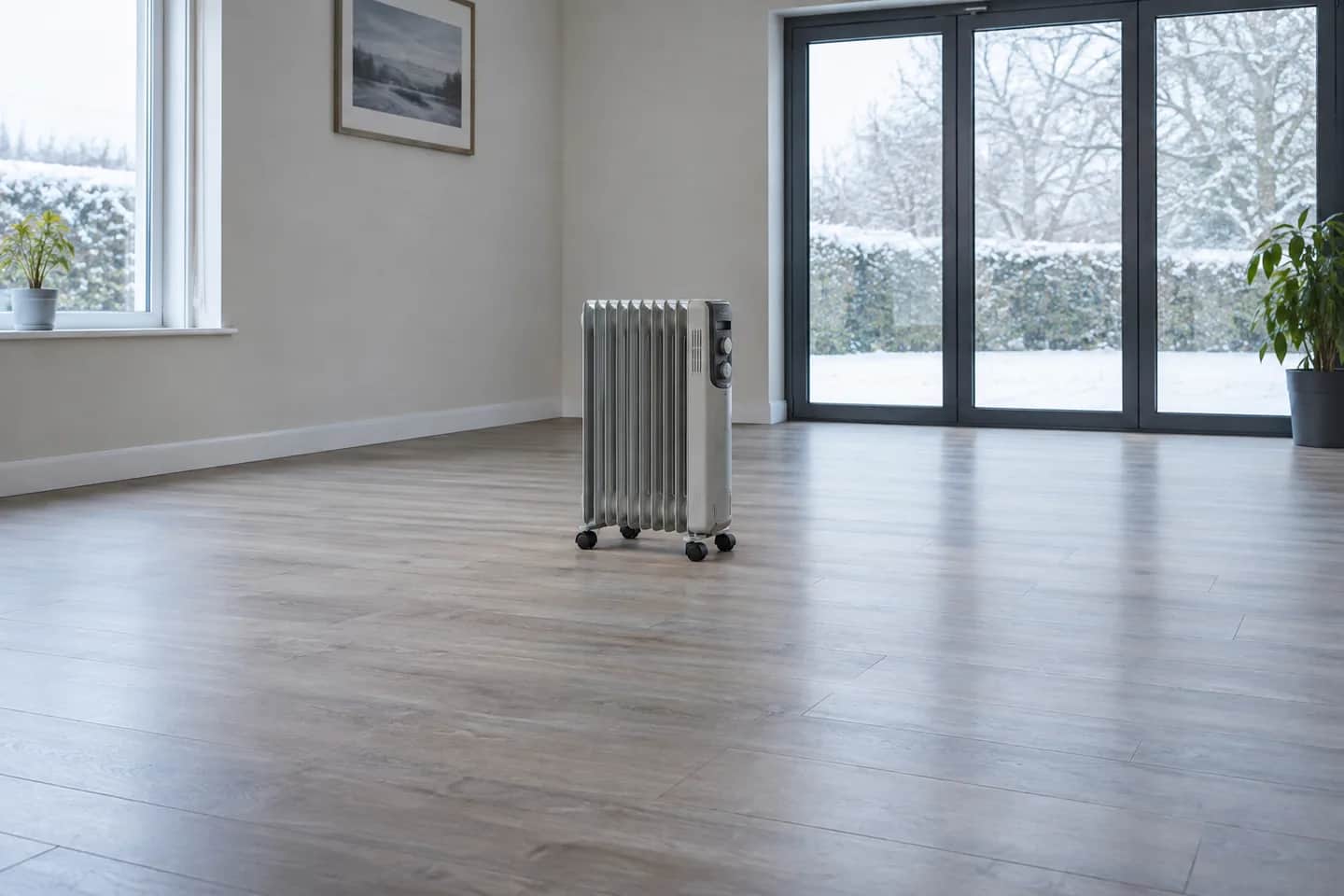
Follow the heater manufacturer's instructions for placement, clearances and operation. Keep it away from curtains, bedding and furniture, and never use it to dry clothes. Use a suitable wall socket directly rather than an extension lead or multiway adaptor.
Do not use a heater with a damaged lead, plug or casing. If you cannot safely position it near a suitable socket, reconsider the arrangement rather than stretching a cable across the room.
Review sockets and everyday equipment
Look for damaged accessories, discolouration or recurring problems when appliances run. More winter use can reveal an existing issue, but the season alone does not explain its cause.
Do not keep resetting a circuit that trips. Stop using affected equipment if safe and seek advice, particularly if there is unusual heat, a burning smell or visible damage.
Check the lighting you rely on
Entrances, paths and frequently used indoor routes may need attention before evenings become darker. Note broken fittings, unreliable sensors and areas that are difficult to see.
Outdoor equipment needs to be suitable for its location. Avoid temporary indoor extension arrangements for outdoor lighting and do not handle damaged equipment in wet conditions.
Prepare for a power cut
Keep a torch somewhere accessible and make sure household members know where it is. Save your electricity network operator's contact details; calling 105 connects you with the network operator for power-cut information.
If you depend on electrically powered medical or essential equipment, discuss an appropriate contingency plan with the relevant provider. Do not assume a domestic solar or battery installation supplies backup power unless that capability has been designed and confirmed.
Book planned work before it becomes urgent
- Have recurring faults investigated.
- Discuss a better socket layout where temporary leads have become permanent.
- Arrange repairs to damaged outdoor fittings.
- Keep electrical reports and appliance instructions accessible.
For planned electrical testing or repairs in Blackpool and the Fylde Coast, call Westwood with the symptoms and property details. We also offer 24/7 emergency call-outs. If there is fire or immediate danger, get clear and call 999.
Sources & further reading
Primary guidance for the topics discussed in this article.
YOUR LOCAL ELECTRICAL TEAM
Reading up on a job?
Let’s talk it through.
Tell us what you need and your postcode. We cover Blackpool and the Fylde Coast.