In this article
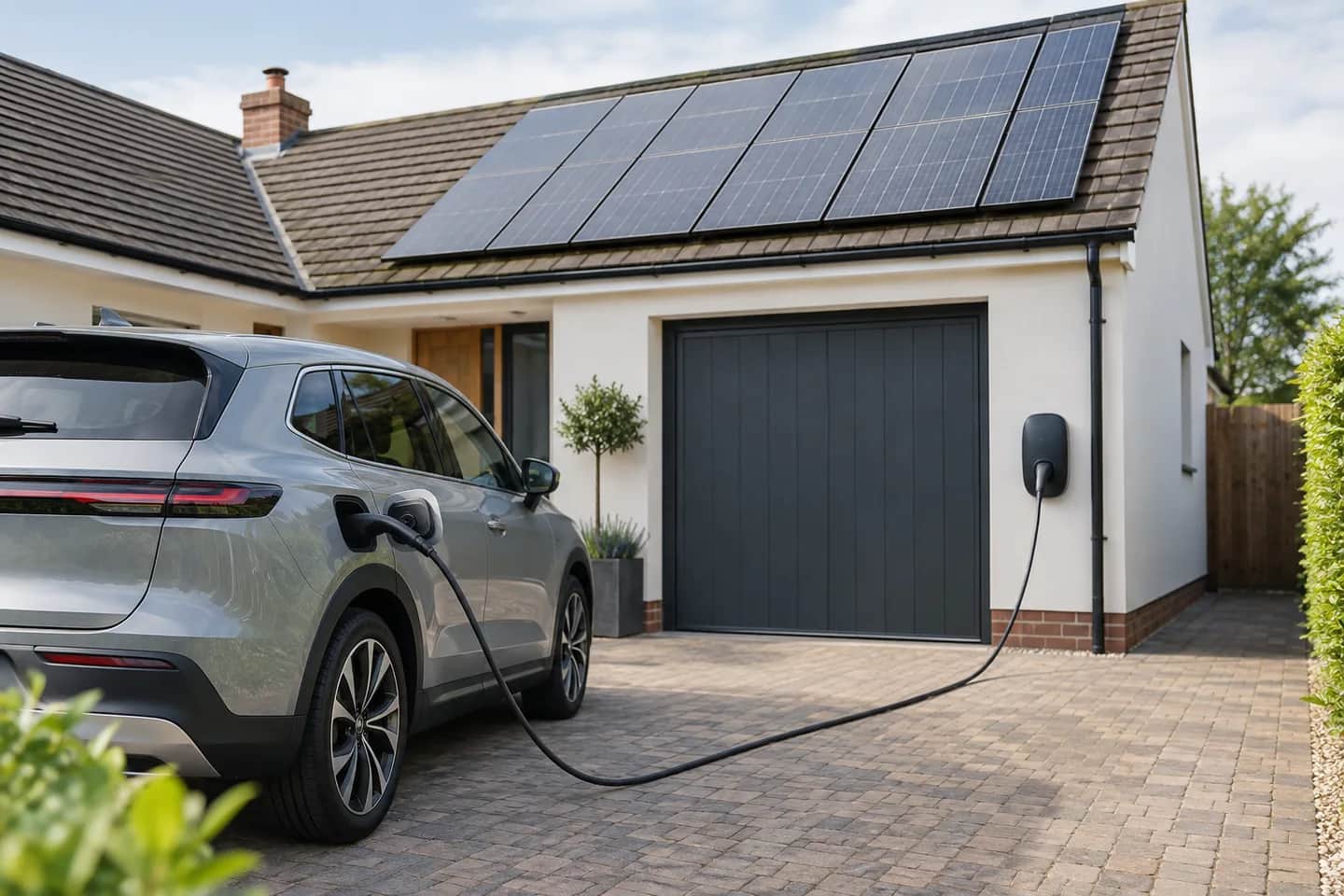
Yes, solar panels can contribute electricity to charge an electric car when the installation and charging equipment are suitably designed. The practical question is how much solar electricity is available when the vehicle is at home and connected.
Solar generation changes through the day and across the seasons. Most households should plan for a mix of solar and grid electricity rather than assume every journey can be powered entirely by the roof.
Timing matters as much as annual generation
A car parked at home during daylight has different opportunities from one that returns after sunset. Household appliances also use electricity, so the total solar output is not necessarily all available to the charger.
Tell the installer about your normal driving routine and charging needs. This is more useful than looking only at the panel rating or the vehicle's advertised range.
Check how the charger uses solar
Some charging systems can respond to surplus solar generation, but compatibility and operating behaviour vary. Ask how the proposed charger measures available energy, when it draws from the grid and what happens if generation falls.
You may need a setting that prioritises having enough charge for a journey rather than waiting for solar alone. Make sure the controls are understandable to everyone who uses the vehicle.
A home battery adds another decision
A battery may shift some generated electricity to a later time, but capacity, losses and other household demand need to be considered. It is not automatically economical to route all vehicle charging through a domestic battery.
Ask how the charger and battery controls will coordinate. Without a clear plan, two independently configured systems may not behave in the way you expect.
Compare import and export choices
Using solar electricity for charging may reduce electricity bought from the grid, but it can also reduce the amount available for export. Compare the relevant import and export tariffs rather than treating generated electricity as having no alternative value.
The Smart Export Guarantee concerns payment for eligible exported electricity. It is separate from the cost of installing a charger or solar system.
What should the installer assess?
- The existing supply and installation.
- Charger location and practical cable access to the car.
- Solar, charger and battery compatibility.
- Your driving routine and required charging flexibility.
- Any applicable network arrangements and commissioning requirements.
Westwood can discuss EV charger installation alongside solar panels in Blackpool and the Fylde Coast. Call with details of your vehicle, parking and any existing equipment so the options can be assessed together.
Sources & further reading
Primary guidance for the topics discussed in this article.
YOUR LOCAL ELECTRICAL TEAM
Reading up on a job?
Let’s talk it through.
Tell us what you need and your postcode. We cover Blackpool and the Fylde Coast.