In this article
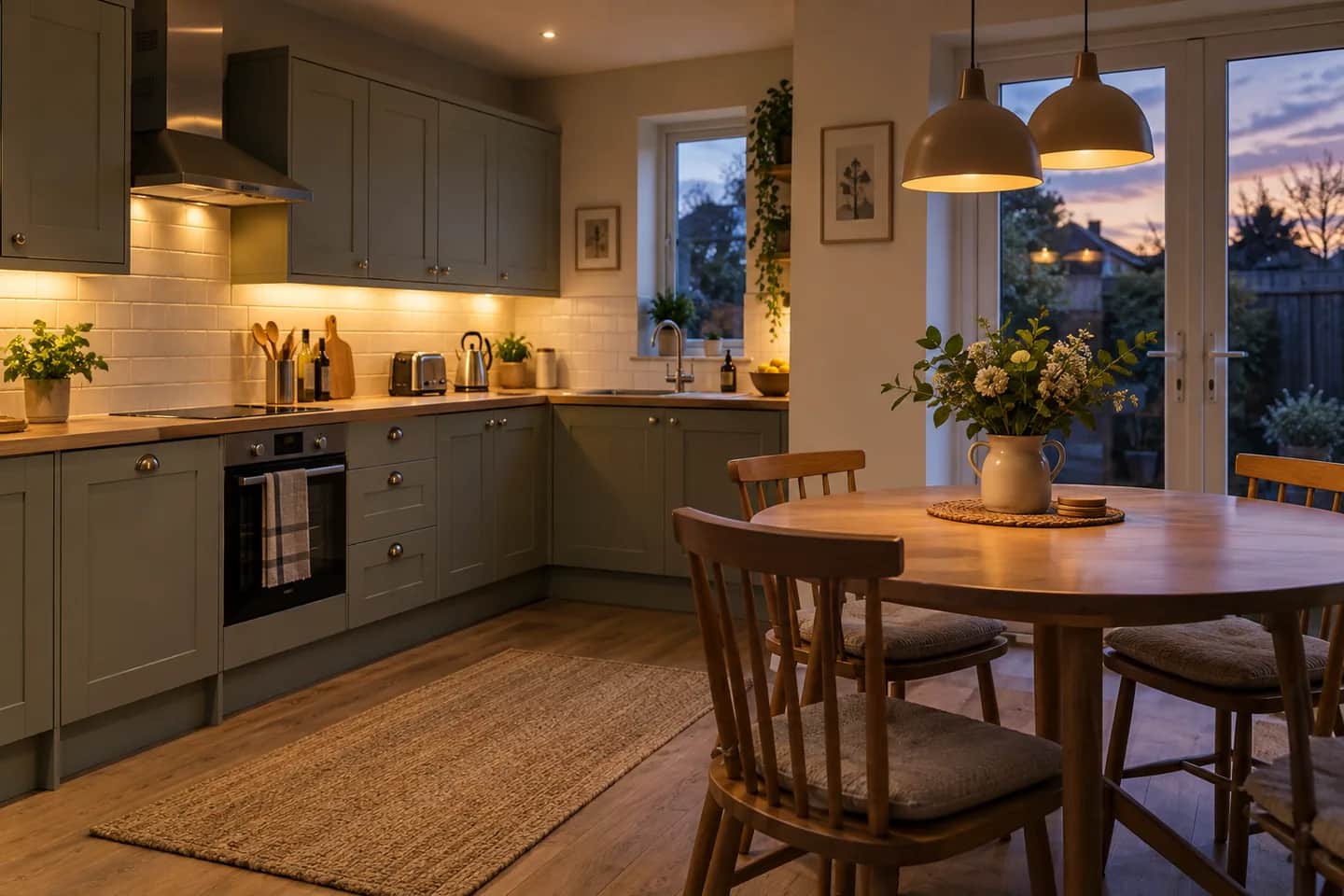
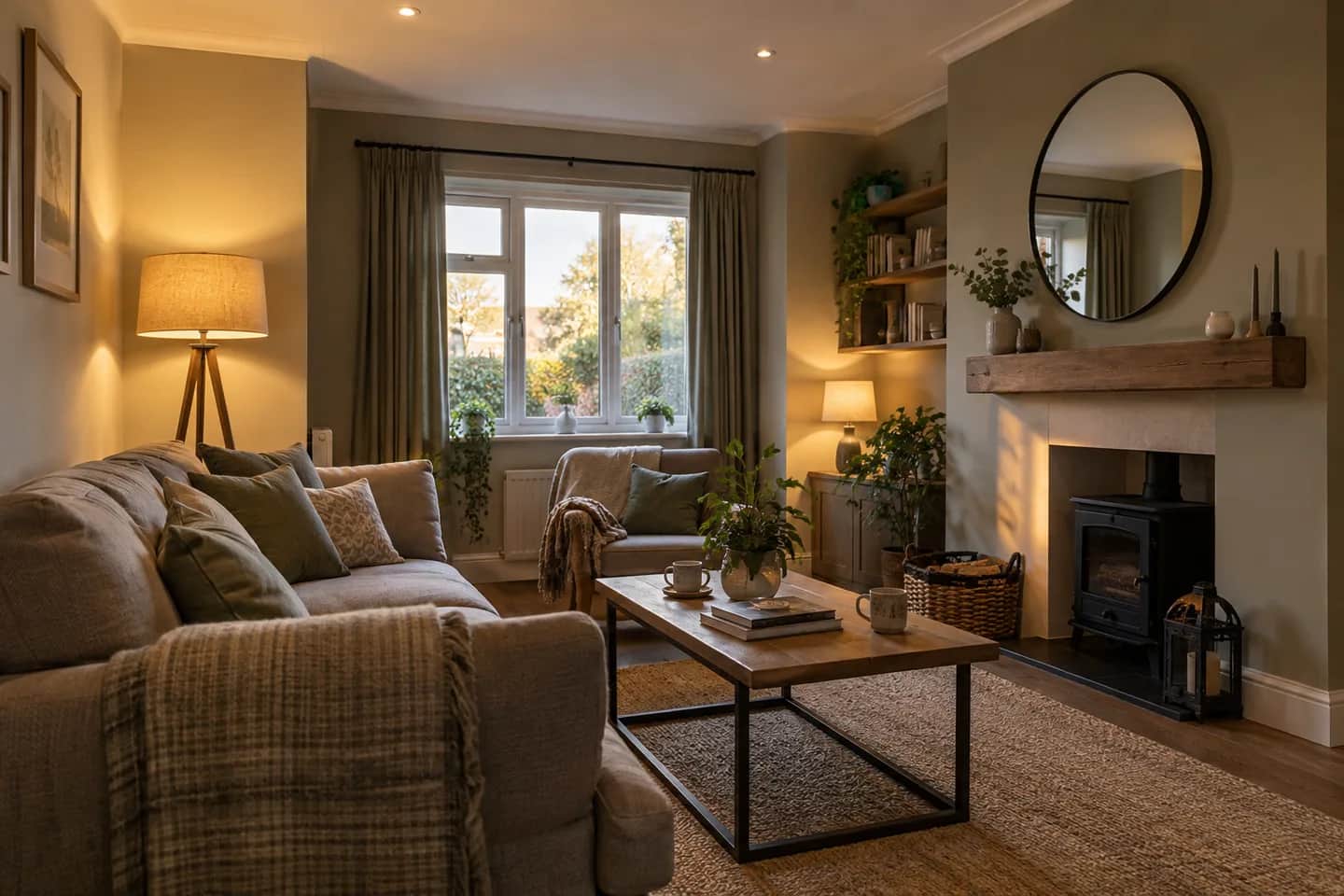
Better lighting often starts with the room you already have. Before buying new fittings, identify where you struggle to see, where glare is uncomfortable and which corners feel gloomy. A few well-chosen changes can make a room more useful without turning it into a building project.
Start with what each space needs
Watch how the room is used in daylight and after dark. Reading, preparing food and working at a desk need light in different places. One bright ceiling fitting can still leave your work surface in shadow.
Write down two or three problems rather than a shopping list: “the kitchen worktop is dark”, “the lamp reflects in the television”, or “we cannot reach the switch from the bed”. This gives an electrician a much clearer starting point.
Choose bulbs by light output and appearance
Lumens describe brightness; watts describe electricity consumption. When replacing a bulb, compare the light output as well as the fitting type, physical size and manufacturer's limits. A lower-wattage bulb is not automatically the right brightness for the task.
Colour temperature affects how a room feels. Warm white often suits relaxed living spaces, while a clearer white may suit a work area. Try one suitable bulb before changing every fitting: wall colours, lampshades and daylight all affect the result. Energy Saving Trust's lighting guide explains these distinctions in more detail.
Add useful layers of light
- General lighting helps you move around and use the room comfortably.
- Task lighting puts light where an activity happens, such as a desk or worktop.
- Accent lighting can make a particular shelf, picture or architectural feature easier to see.
You do not need all three everywhere. A reading lamp may solve a specific problem more effectively than replacing the ceiling lights. Keep lamp leads out of walkways and do not add adaptors simply to accommodate more fittings.

Check compatibility before adding dimming
A dimmable LED lamp, its driver and the dimmer must work together. Flicker, poor dimming or buzzing can be a compatibility issue, but should not be diagnosed from appearance alone. Give your electrician the product details before buying a whole room's worth of lamps or controls.
Changing a normal user-replaceable bulb is different from replacing a wall switch or altering a lighting circuit. Fixed wiring, new fittings and new controls should be assessed and installed by someone competent for the work.
Decide what is worth doing now
Keep a small list of the changes that would improve daily use most. If decorating is planned, discuss extra lighting points before the walls are finished. If you rent, check what changes the landlord will permit.
For help choosing and fitting a practical scheme, explore our indoor lighting service. Call Westwood with your postcode, the room you want to improve and a description of the problem.
Sources & further reading
Primary guidance for the topics discussed in this article.
YOUR LOCAL ELECTRICAL TEAM
Reading up on a job?
Let’s talk it through.
Tell us what you need and your postcode. We cover Blackpool and the Fylde Coast.